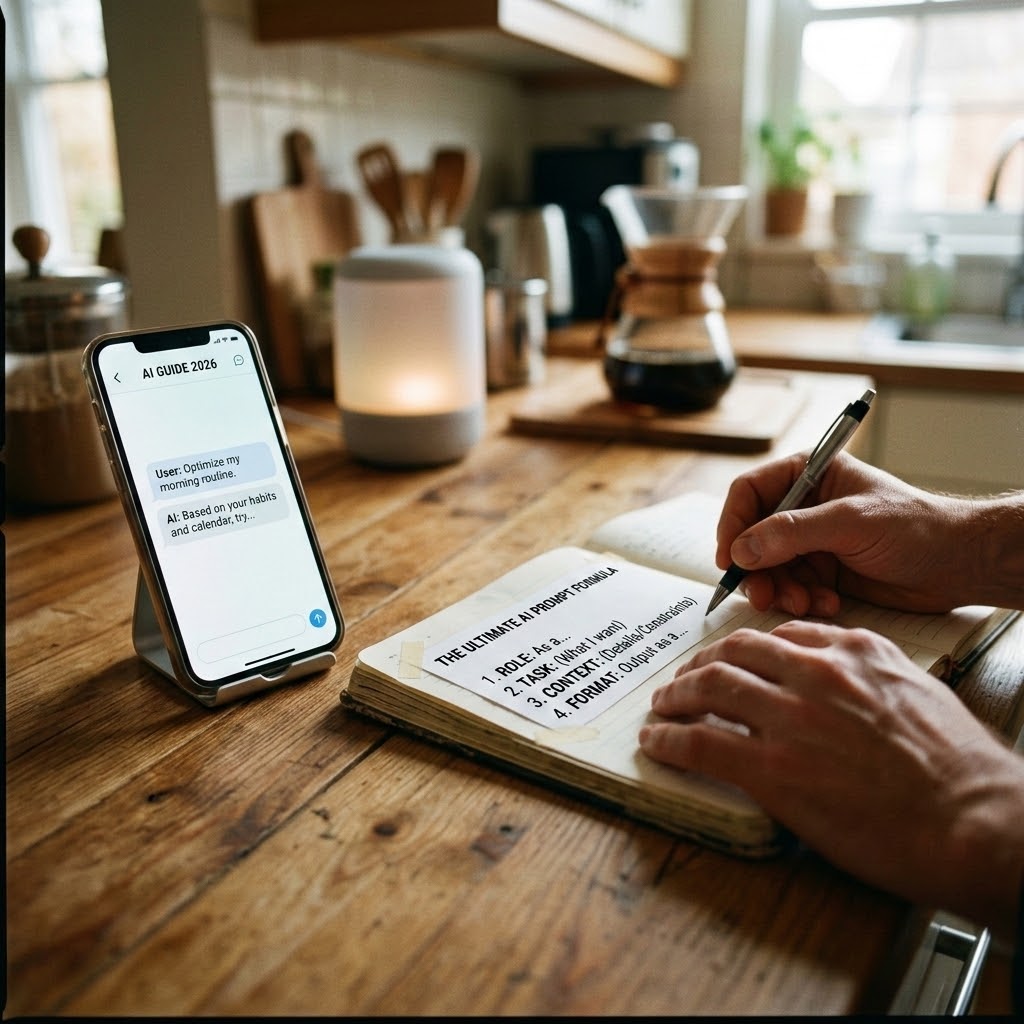
In my experience, 2026 isn't about AI replacing us; it's about having a smarter, faster leverage for the work we do every day. When I look at the tools that have actually made a difference in my life, they aren't the ones promising sci-fi magic. They are the practical, grounded tools that give me control. Whether I'm planning a complex business project, troubleshooting a technical hurdle, or simply organizing my messy stream of consciousness, the right AI tools act as a force multiplier.
But there is a catch: if you aren't careful, you can end up letting the tools dictate your thinking. Over the last year, I've tested countless systems, and I've learned that the best ones aren't just powerful, they are the ones that let you stay in the driver's seat. Here is what I've found that actually works for everyday people.
The biggest shift I've made this year is moving away from purely cloud-based everything. When I started running AI locally-directly on my own machine-everything changed. It's not about avoiding AI; it's about privacy and ownership. Tools like Ollama allow me to run private models right on my laptop without sending every unfinished thought to a server.
I've found that unfinished work is often the most private work. A first thought may be messy, a first plan incomplete, or a first question blunt. In my experience, local AI gives those early stages a place to exist before I decide what deserves to become public or move to a more powerful cloud tool.
If you deal with a lot of information, NotebookLM has become my go-to research partner. Unlike a general chat interface, it grounds responses in sources I upload myself.
I noticed a massive difference when I stopped asking AI general questions and started asking it to explain my material. When I feed it my own PDFs, audio transcripts, or project notes, it synthesizes the material more accurately instead of guessing from the open web.
I've noticed that most people blame the AI when they get a bad answer, but usually, the problem is the prompt. I've stopped using vague requests like "explain this." Instead, I use a framework I call the Ultimate AI Prompt Formula.
I tested this formula across many tasks, and the results were consistently more professional and practical than standard one-sentence prompts.
By explicitly asking the AI to analyze from multiple perspectives or explain its reasoning in a structured way, I get better answers that are easier to use.
In my experience, the best use for AI isn't writing poetry-it's solving boring, stressful problems. I've used these tools for everything from identifying why a car battery keeps dying in winter to preparing business checklists.
Local AI is particularly useful for troubleshooting computer problems or organizing household projects because the details stay on my machine. I've found that asking "What is the simplest cause for this problem?" and "What is a safe first check?" saves me hours of frustration.
The most important lesson I've learned is to never lose the human in the loop. AI can analyze numbers and identify patterns faster than I can, but it lacks the context of my life and goals.
I noticed a dangerous trend where I started following AI advice without questioning it. I had to remind myself: AI can give suggestions, but it cannot give wisdom. Wisdom comes from reflection, mistakes, and personal understanding.