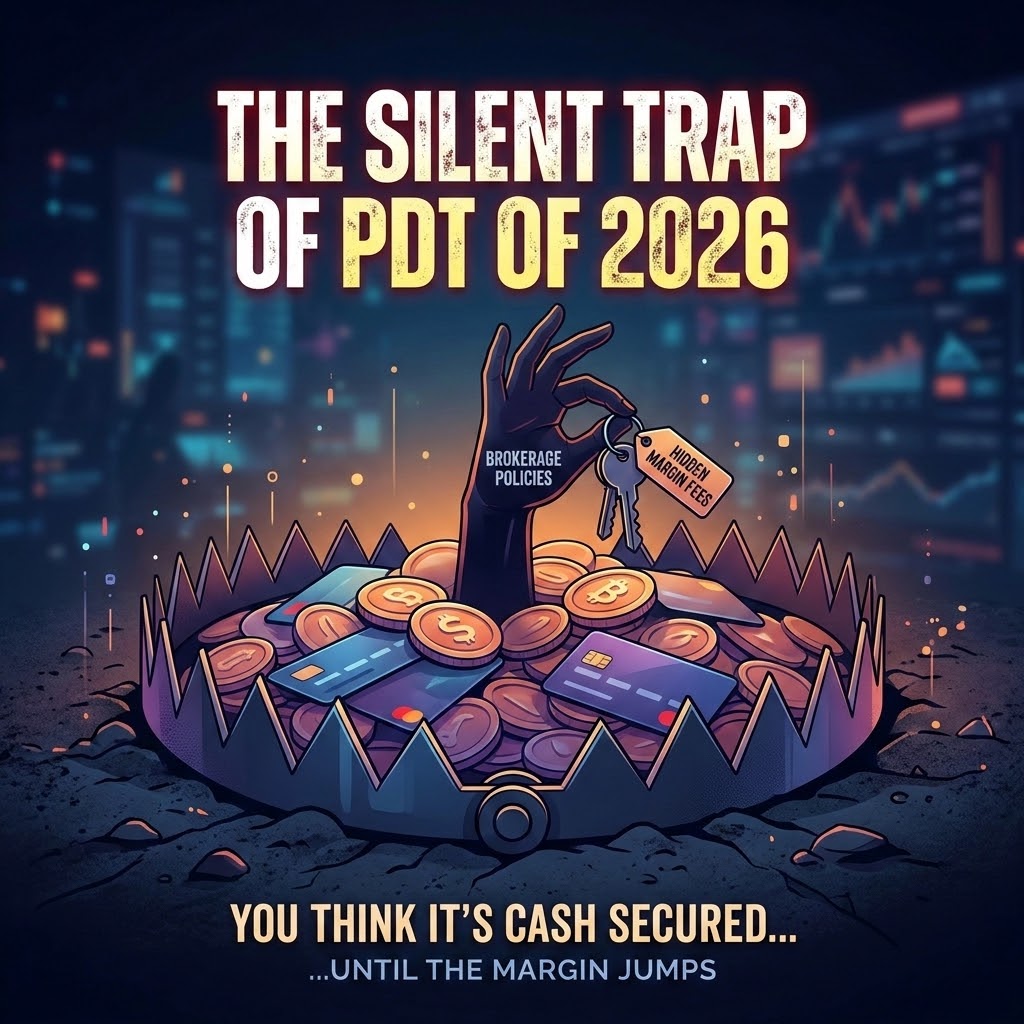
For years, I have considered the cash-secured put one of the most reliable strategies for generating consistent income in a portfolio. There is a quiet satisfaction in selling an option on a stock you are already comfortable owning, collecting the premium, and waiting for the market to move. It feels straightforward: you set aside the cash, you write the contract, and you wait. However, in my recent trading activity, particularly on platforms like E*Trade, I have noticed a shift in how brokerage accounts handle collateral and margin for these positions. This shift is not just a technicality; it is a hidden reality that can erode your returns, surprise you with borrowing interest, and leave you questioning your true buying power. What used to be a clearly defined cash-covered trade has, in some instances, become a silent margin usage trap.
Before diving into the risks, it is important to acknowledge why so many of us, including myself, gravitate toward cash-secured puts. When executed correctly, this strategy provides a robust method for wealth accumulation. I have found that it allows me to profit from a stock's sideways movement or even a slight decline, provided the price stays above my strike price. Unlike buying stock outright, which requires the full capital commitment immediately, selling a put allows me to earn yield while waiting for a price point that I find attractive. If the stock does drop and I am assigned, I end up purchasing shares at a price I had already determined was fair. This approach essentially pays me to wait for a better entry price. In my experience, when combined with careful fundamental analysis, this strategy serves as an excellent way to supplement dividends and capital appreciation, making it a cornerstone of a conservative growth portfolio.
In the past, the mechanics of a cash-secured put were transparent. You put up the cash, the broker held it as collateral, and the position was truly "covered." You knew exactly how much cash was locked away, and your buying power reflected that reality. Recently, however, I have observed that this is no longer a given. Brokerages have increasingly shifted toward dynamic collateral requirements that do not always "hold" or segregate your cash in the traditional sense. Instead, some platforms allow the margin requirements for these short positions to fluctuate based on broader portfolio volatility or the firm's internal risk models.
The problem I encountered is that my cash was not being held in a static, dedicated bucket for the put. Because the brokerage did not explicitly lock the funds in the way I expected, the system treated my available capital as part of a general margin pool. This meant that while I thought I was making a cash-covered trade, the system viewed it as a margin-leveraged position. This creates a dangerous lack of visibility into actual cash buying power. If you are not vigilant, you may find yourself using margin without even realizing it, and that is where the real trouble begins.
The most immediate and painful consequence of this shift is the accrual of unexpected borrowing interest. If your brokerage does not properly segregate the cash you allocated for your put, that "free" cash might be getting utilized elsewhere in your account, or worse, your position might be dipping into margin because of daily valuation fluctuations. When this happens, you are essentially borrowing from the broker to finance a trade that you believed was fully paid for.
I have seen situations where traders-myself included-were charged interest on what they assumed were "cash-secured" positions. If your margin requirements fluctuate due to market volatility, and you are unknowingly sitting on a margin debit, you are losing money on interest payments that significantly eat into your premium income. In my experience, these fees are not always obvious. You might not see a "margin call" in the traditional sense, but you will see the steady, quiet erosion of your account balance via borrowing interest charges. This transforms a risk-defined, income-generating strategy into a source of unexpected overhead.
Beyond the margin interest issue, there are other disadvantages to how modern brokerages manage these requirements that you should be aware of. One of the most significant is the lack of a clear "safety buffer." When the brokerage dynamically manages your margin requirements, a sudden spike in volatility can cause your required collateral to jump. If your account does not have enough liquidity, the broker may restrict your ability to enter new trades or, in extreme cases, liquidate existing positions to meet those requirements.
Another issue is the complexity of "Portfolio Margin" or "Risk-Based Margin" versus the older "Reg T" (Regulation T) requirements. Many retail platforms have moved toward proprietary risk-based models. While these models are designed to be more efficient, they are also opaque. I have found it difficult to calculate exactly how much buying power I will have after initiating a new position because the impact on my account is no longer a simple subtraction of the margin requirement. This lack of transparency can lead to over-leverage. You might feel you have plenty of room to sell more puts, only to find that a single bad day in the market triggers an unexpected margin squeeze across your entire portfolio.
So, how do we navigate this new reality? The first and most important step is to stop assuming your broker is "holding" your cash. I have had to change my own trading behavior significantly to account for this. First, I now maintain a much higher cash buffer than the minimum requirements suggest. I no longer trade to the limit of my perceived buying power. If the broker says I can sell ten contracts, I might only sell six or seven to ensure that any fluctuations in collateral requirements do not trigger a margin event.
Second, I proactively monitor the daily margin reports provided by the brokerage. Most brokers produce these reports, though they are often buried in the account statements section. These documents break down, position by position, the margin requirement for each item and how it relates to overall limits. If you see your "net equity" falling toward the internal warning levels, you need to reduce your position size immediately. Never assume the "buying power" figure displayed in your dashboard is a safe number to hit. It is often a maximum threshold, not a recommendation. Finally, if your broker cannot provide a clear, static way to segregate cash for a specific option strategy, consider if that platform is the right one for your style of trading.
This experience has been a sobering reminder that in the world of online trading, we must always look beyond the user interface. Even when a strategy feels safe and familiar, the underlying architecture of your brokerage account can change, and those changes have real financial consequences. I am still using this strategy, but I am doing so with a much sharper eye on the details and a much larger cushion of safety. I suggest you do the same. If you are interested in exploring how to better hedge these positions when the market turns, my next article will cover the mechanics of using bear put spreads to manage downside risk more effectively.